

Modules

A Safety Manager reviewing Safety Performance on a tablet using Safety Champion Software Data Analytics Module.
Trending

Safety Metrics: Your Best Ally in Safety Management

Effective safety management relies on more than good intentions and documented procedures. It depends on having clear visibility over what is happening in the workplace and understanding whether safety efforts are genuinely making a difference. This is where safety metrics become a powerful ally. 

Safety metrics provide organisations with measurable insights into how their health and safety programs are performing. They help move safety management away from assumptions and towards informed, evidence-based decision making. 

What are safety metrics?

Safety metrics are measurable indicators used to evaluate the performance of a health and safety program. They track what is happening in the workplace, identify trends, and highlight areas that require attention or improvement. When used effectively, safety metrics turn safety management into a proactive process rather than a reactive one. 

Without safety metrics, organisations may believe their safety program is working simply because incidents are not being reported. However, a lack of data does not necessarily mean a lack of risk. Safety metrics help uncover hidden issues before they result in harm. 

Why safety metrics are critical to safety management?

Safety metrics play a central role in modern safety management because they: 

  • Provide clarity on safety performance across the business.
  • Highlight emerging risks and patterns before incidents escalate.
  • Support informed and defensible decision making.
  • Enable continuous improvement of safety systems and processes 

Consistently tracking safety metrics will allow your business to gain a clear understanding of where safety controls are effective and where gaps exist. This visibility allows leaders and safety teams to prioritise actions that will have the greatest impact on reducing risk. 

Essential safety metrics every business should understand

While safety metrics should always reflect the specific risks and operations of a business, there are several core safety KPIs commonly used across industries. Understanding these metrics is essential for effective safety management. 

Incidents and near misses:

Tracking incidents and near misses provides valuable insight into where hazards exist and how frequently safety controls are being challenged. Near misses are particularly important, as they often indicate areas where serious incidents could occur if preventative measures are not strengthened. 

Monitoring safety metrics related to incidents by category, location, or work group helps organisations identify patterns and take early corrective action. 

Inspections and audits: 

Inspections and audits are leading safety metrics that demonstrate how actively safety is being managed. Tracking when inspections occur, what they cover, and their outcomes helps organisations understand whether safety standards are being consistently applied across the business. 

These safety metrics also highlight trends in compliance and provide evidence of due diligence. 

Corrective actions: 

Corrective actions are a critical link between identifying issues and resolving them. Safety metrics related to actions focus on what has been raised, what is still open, and how quickly issues are being addressed. 

A high number of overdue actions can signal resourcing challenges, system gaps, or deeper cultural issues that require attention. 

Training and competency: 

Training metrics track whether workers have the required skills and knowledge to perform tasks safely. These safety metrics help confirm that training obligations are being met and that safety expectations are clearly understood across the workforce. 

Strong performance in this area supports compliance and contributes to a positive safety culture. 

If you want to know more key safety indicators and how to measure and report on WHS, have a look at this SafeWork Australia resource.

Turning safety metrics into meaningful insights

Collecting safety metrics alone is not enough. The real value comes from analysing the data and using it to guide decisions. This is where having the right systems in place makes a significant difference. 

A centralised Safety Management Software allows safety metrics to be recorded consistently, analysed efficiently, and shared with the right people at the right time. With all information in one place, organisations can move from reporting data to acting on it. 

Safety Champion's Data Analytics Module

The Safety Champion Data Analytics Module enables organisations to capture, analyse, and interpret safety metrics across key areas of safety management. It transforms raw data into clear, visual insights that support proactive safety decisions. 

Analysing tasks: 

Tasks data provides a snapshot of the overall health of the business. By analysing tasks completed by date and module, organisations can confirm whether safety activities are being completed as planned and where follow-up may be required. 

These safety metrics help ensure teams remain accountable and on track with critical safety responsibilities. 

Analysing incidents: 

Incident analysis allows organisations to review incidents by date, category, workplace, or demographics. This makes it easier to identify emerging trends early and strengthen safety plans before risks escalate. 

Safety metrics related to associated injuries also support deeper understanding of incident severity and potential control failures. 

Analysing actions: 

Action tracking provides visibility over corrective actions in progress and those already closed. These safety metrics help confirm that issues are being addressed in a timely manner and that lessons learned are not lost. 

Clear oversight of actions supports continuous improvement and reduces the likelihood of repeat incidents. 

Analysing inspections: 

Inspection data highlights how safety practices are being applied across the business. By visualising inspection outcomes and audit performance, organisations can see how safety culture is developing and where further support or intervention may be needed. 

These safety metrics reinforce accountability and demonstrate a commitment to maintaining safe work environments. 
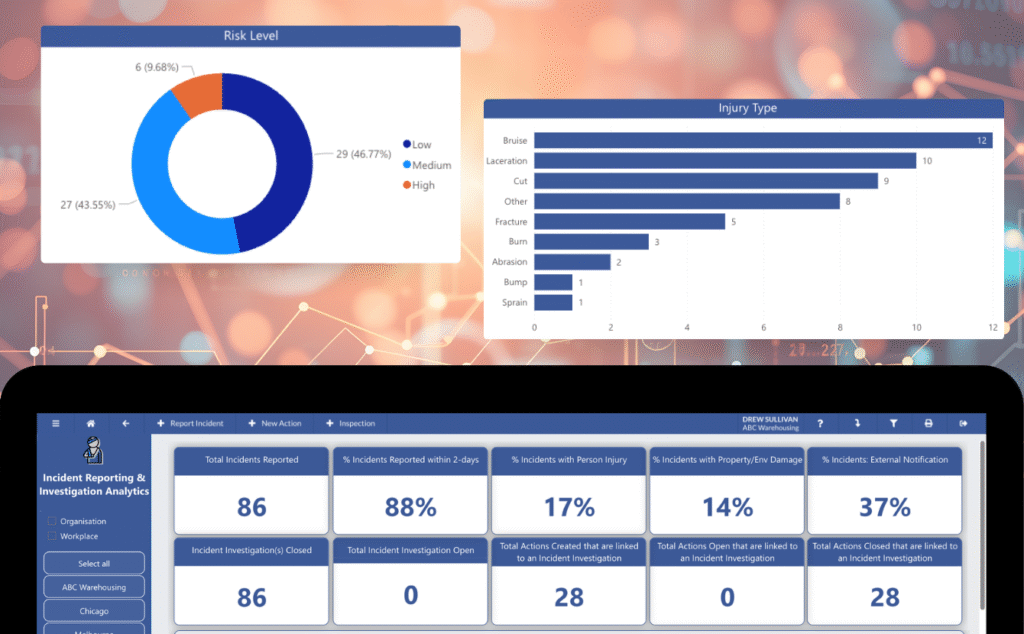
SAfety Champion Data Analytics module used for analysing safety metrics and KPIs

Discover our full suite of modules to enhance safety management:

How safety metrics benefit the business

When used effectively, safety metrics deliver benefits well beyond compliance. They provide: 

  • Clarity by presenting safety information in a clear and accessible way.
  • Understanding of the organisation’s unique risks and operational challenges.
  • Confidence in decision making, supported by reliable data.
  • Direction for targeted improvements that strengthen safety outcomes.
  • Strong safety metrics help leaders understand what is really happening on the ground and support decisions that protect people and the business. 

Making safety metrics work for your organisation

Every organisation is different, and safety metrics should reflect this. Selecting the right metrics, reviewing them regularly, and acting on the insights they provide are essential steps in effective safety management. 

Combining the right safety metrics with a powerful Safety Management Software will allow you to find new insights, demonstrate due diligence, and continuously improve the safety performance of your business. 

Safety metrics are not just numbers. They are a critical tool for protecting people, strengthening safety culture, and supporting sustainable business success. 

FAQs

Leading safety metrics focus on proactive activities designed to prevent incidents before they occur, such as inspections, training, and hazard reporting.


Lagging safety metrics measure outcomes after an incident has happened, including injury rates and lost time injuries. Using both provides a balanced view of safety performance and supports effective safety management.

Safety metrics should be reviewed regularly to remain effective. Many organisations review key safety metrics monthly, while higher-risk activities may require weekly or real-time monitoring. Consistent review ensures emerging trends are identified early and corrective action can be taken promptly.

Safety metrics provide reliable data that helps leaders understand risks, prioritise actions, and allocate resources effectively. Analysing safety metrics, allow businesses to move beyond assumptions and make informed decisions that improve safety outcomes and support compliance.
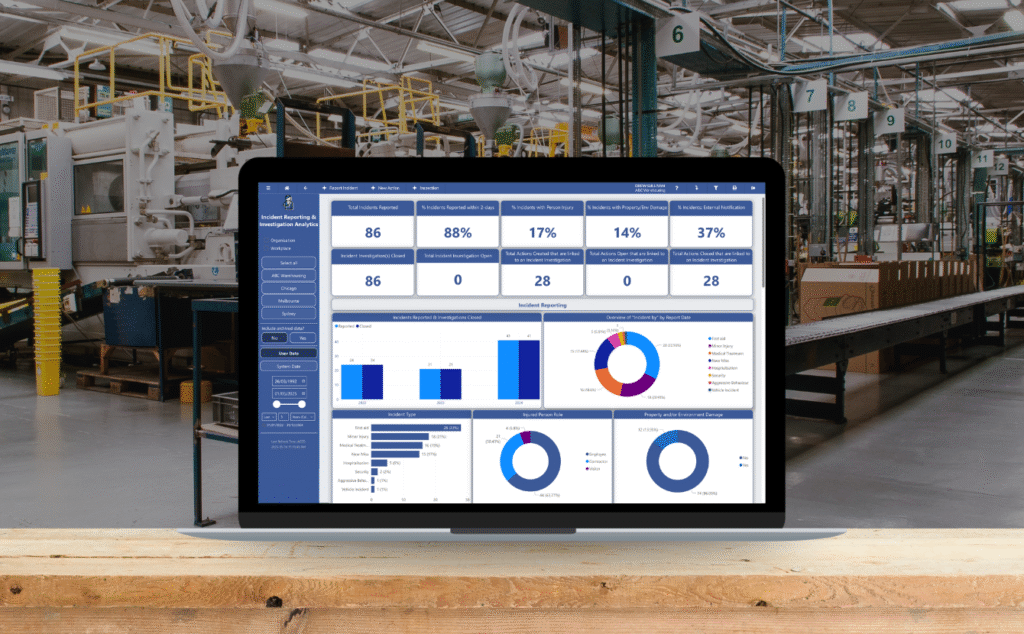

A laptop showing safety metrics improving via OHS Software at a manufacturing company
Trending

Improving Incident Management and Reporting Through Safety Software 

Ensuring the health and safety of your team can be challenging. Organisations are expected not only to meet regulatory requirements but also to adopt proactive approaches to identifying, assessing, and controlling workplace risks. One of the most effective ways to achieve this is through OHS safety software. 

Safety Champion, an all‑in‑one safety management platform, gives businesses the tools to simplify, strengthen, and systemise their safety processes. In this blog, we explore how OHS safety software enhances safety performance and how Safety Champion’s core modules deliver real value to organisations of all sizes. 

Faster, smarter incident reporting and investigation

Efficient incident reporting is the foundation of strong safety performance. Manual reporting methods (Typically paper forms or spreadsheets) often result in delays, inconsistencies, or even missing information. 

Safety software transforms this process by making reporting simple, consistent, and immediate. With Safety Champion, organisations benefit from: 

  • Easy reporting from any device through a user-friendly app.
  • Register incidents, near misses, hazards, and injuries in one place.
  • Automated notifications to the right supervisors or safety leaders.
  • Clear workflows for investigation and corrective actions 

Our Incident Management Module ensures that every report triggers an organised process, helping organisations to improve response times and prevent future events. 

Better data management and actionable insights

A major challenge in safety management is keeping track of multiple forms, spreadsheets, records, and emails. OHS safety software helps by centralising safety data and making it accessible, reliable, and easy to interpret, empowering meaningful decisions. 

Safety Champion enables you to: 

  • Store securely all incident reports, inspections, safety observations, and actions.
  • Identify trends through dashboards and reporting tools.
  • Identify hotspots or recurring risks.
  • Drive data-informed decision-making 

With the Data Analytics and Reporting Module, organisations can quickly visualise performance, monitor open actions, and make improvements backed by real evidence. 

Strengthened compliance with safety regulations

Meeting regulatory requirements such as ISO 45001, AS/NZS 4801, and WHS legislation can be complex and time‑consuming. OHS safety software makes compliance more structured and predictable. Safety Champion supports compliance by providing: 

  • Custom templates for inspections, audits, and risk assessments.
  • Automated reminders for safety tasks and obligations.
  • Document management to store and share updated files such as policies or SOP’s.
  • Transparent audit trails to demonstrate compliance readiness 

Improved communication and team collaboration

Effective communication is essential for maintaining a safe workplace and building a strong culture of safety. Safety Champion streamlines communication between employees, supervisors, and safety teams through shared visibility and real-time updates.  

Teams can benefit from: 

  • Status visibility of corrective actions.
  • Clear and trackable safety tasks.
  • Immediate alerts for high‑risk events.
  • Empowered workers reporting issues quickly.

Centralised communication across modules such as Hazards & Corrective Actions, and Incident Management allows teams to work together more effectively to reduce risks.

Supporting a strong, proactive culture of safety

A positive culture of safety is shaped by consistency, accessibility, and engagement. Safety software encourages workers to take an active role in safety because the process becomes simpler, faster, and more transparent. 

Safety Champion helps build a strong culture of safety by: 

  • Giving employees an easy way to report hazards and incidents.
  • Providing visibility into follow-ups and action status.
  • Reinforcing accountability at all levels.
  • Enabling continuous improvement through real data.

By using Safety Champion, organisations demonstrate a genuine commitment to protecting their people, building trust and driving long-term cultural change. 

Investing in the right tools doesn’t just support compliance, it empowers your business to actively prevent incidents, protect its people, and continually improve safety outcomes. 

Discover our full suite of modules to enhance safety management:

FAQs

Safety Champion allows reporting of injuries, near misses, hazards, property damage, environmental incidents, and more. The software can be customised to specific organisational needs. 

Yes. Employees can report from any device (phone, tablet, or computer), making it easy to report incidents in real time. 

Absolutely. Safety Champion is designed to scale, offering flexible modules that suit small teams through to large organisations with complex requirements. 

A man in front of his computer looking tired. Workplace Fatigue. Safety Software to manage NEW Psychosocial regulations.
Industry News

Safety Software to prevent Workplace Fatigue under new psychosocial regulations 

Workplace fatigue is a state of physical, mental, or emotional exhaustion that reduces a worker’s ability to perform safely and effectively. In Victoria, fatigue is now recognised as a psychosocial hazard under the new Occupational Health and Safety (Psychological Health) Regulations 2025, which came into effect on 1 December 2025. These regulations require employers to identify, assess, and control psychosocial hazards in the same manner as physical hazards. 

So, how can organisations meet these obligations and create a safer, healthier workplace?  

Discover Safety Champion Software, a comprehensive health and safety management platform designed to help businesses proactively manage risks. 

Psychosocial Regulations: What is required?

The new Victorian regulations, and similar frameworks across Australia, make it clear: psychosocial hazards such as fatigue must be managed through higher-order controls, not just training or awareness campaigns. Employers are now legally required to: 

  • Identify psychosocial hazards such as excessive workloads, irregular shifts, and poor support systems. 
  • Eliminate or minimise risks by redesigning work systems, improving scheduling, and fostering supportive environments. 
  • Consult workers and review controls regularly to ensure effectiveness. 

For more details, see the updated Occupational Health and Safety Psychological Health Regulations 2025. 

How Safety Champion Software Supports Fatigue Prevention

Employers must now identify hazards, eliminate or minimise risks, and consult workers regularly. Safety Champion Software makes these requirements actionable through its integrated modules, enabling a seamless transition from reactive safety management to a proactive culture of safety. 

1. Identify psychosocial hazards 

Excessive workloads, irregular shifts, and poor support systems are common fatigue triggers. Safety Champion helps you uncover these risks through: 

  • Inspection Module: Use checklists to proactively identify potential fatigue risks before they lead to harm.  
  • Hazard Module: Log hazards as they arise for immediate visibility. 
  • Incident Module: Capture fatigue-related incidents when they occur. 

2. Understand and minimise risks 

Once hazards are identified, organisations must implement controls to reduce risk. Safety Champion’s Risk Module allows you to: 

  • Risk Module: Record and track risk assessments, providing a clear framework for managing and mitigating threats, protecting both your people and business operations. 
  • Data Analytics Module: Supports your decision-making process with real insights. 

3. Consult with your people

Ongoing consultation is a legal requirement, but it is also a best practice when it comes to protecting and engaging with your people. Communicate effectively through: 

  • Communications: Foster a two-way conversation between workers and management. Provide clear information through diverse formats (video, questionnaires, documents, etc) and collect insights from your workers with ease. 
  • Documents: Share best practices, policies and procedures to keep everyone informed and make sure your people have in hand the resources they need. 

4. Plan and monitor activities 

Reviewing the effectiveness of your safety program is the most important thing a safety leader can do.  

  • Safety Plan: Schedule specific or recurring activities such as fatigue risk reviews and psychosocial hazard assessments. 
  • Reporting: monitor trends, track corrective actions, and demonstrate compliance with psychosocial regulations. Imagine having all your data centralised in one place. 

Safety Champion transforms compliance into a practical and proactive process, helping organisations manage fatigue effectively and meet psychosocial safety obligations. 

Discover our full suite of modules to enhance safety management:

Psychosocial Safety management beyond compliance

Certain hazards, such as fatigue, represent both a psychosocial hazard and an outcome of other hazards like high job demands or poor organisational support. Safety Champion’s integrated approach aligns with ISO 45003 standards and the new Victorian regulations by prioritising work design changes over superficial fixes. This means organisations should consider: 

  • Redesign rosters to allow adequate rest. 
  • Balance workloads to prevent chronic overtime. 
  • Improve communication and recognition systems to reduce stress. 
  • Understand systematic bottlenecks and other ‘upstream’ causes of fatigue. 
  • Design systems around other industry-specific requirements, such as transport and logistics (NHVR).  

Implementing Safety Champion Software doesn’t just tick regulatory boxes, it creates a culture of care and accountability supporting businesses to: 

  • Reduce incidents and injuries linked to fatigue. 
  • Improve employee wellbeing and morale. 
  • Enhance productivity and retention through safer work practices. 
  • Demonstrate a commitment to wellbeing.
  • Demonstrate a commitment to continuous improvement.

Do you want to know more about Psychosocial Safety Management?

Download our FREE Psychosocial Whitepaper

FAQs

Psychosocial hazards include factors like high job demands, poor support, bullying, harassment, and fatigue. Employers must identify and control these risks through. Learn more on Action OHS Consulting latest blog: New Psychosocial Regulations: A Guide for Businesses 

It provides tools for hazard identification, incident reporting, communication, and monitoring, ensuring organisations meet legal duties under the new regulations. 

No. While scheduling is important, fatigue management also involves improving job design, support systems, and organisational culture to address root causes. Need specialised advice? Book a free discovery call here.

Scroll to Top

Sales Enquiry

Clayton Scott
Sales Manager

Let's talk about safety
in your business.

“If you’re looking for a partner who understands the safety landscape and can help you implement scalable, compliant, and practical solutions, let’s start a conversation. I’d love to hear about what you’re working on and how we can help.”

Contact Us