
Effective safety management relies on more than good intentions and documented procedures. It depends on having clear visibility over what is happening in the workplace and understanding whether safety efforts are genuinely making a difference. This is where safety metrics become a powerful ally.
Safety metrics provide organisations with measurable insights into how their health and safety programs are performing. They help move safety management away from assumptions and towards informed, evidence-based decision making.
What are safety metrics?
Safety metrics are measurable indicators used to evaluate the performance of a health and safety program. They track what is happening in the workplace, identify trends, and highlight areas that require attention or improvement. When used effectively, safety metrics turn safety management into a proactive process rather than a reactive one.
Without safety metrics, organisations may believe their safety program is working simply because incidents are not being reported. However, a lack of data does not necessarily mean a lack of risk. Safety metrics help uncover hidden issues before they result in harm.
Why safety metrics are critical to safety management?
Safety metrics play a central role in modern safety management because they:
- Provide clarity on safety performance across the business.
- Highlight emerging risks and patterns before incidents escalate.
- Support informed and defensible decision making.
- Enable continuous improvement of safety systems and processes
Consistently tracking safety metrics will allow your business to gain a clear understanding of where safety controls are effective and where gaps exist. This visibility allows leaders and safety teams to prioritise actions that will have the greatest impact on reducing risk.
Essential safety metrics every business should understand
While safety metrics should always reflect the specific risks and operations of a business, there are several core safety KPIs commonly used across industries. Understanding these metrics is essential for effective safety management.
Incidents and near misses:
Tracking incidents and near misses provides valuable insight into where hazards exist and how frequently safety controls are being challenged. Near misses are particularly important, as they often indicate areas where serious incidents could occur if preventative measures are not strengthened.
Monitoring safety metrics related to incidents by category, location, or work group helps organisations identify patterns and take early corrective action.
Inspections and audits:
Inspections and audits are leading safety metrics that demonstrate how actively safety is being managed. Tracking when inspections occur, what they cover, and their outcomes helps organisations understand whether safety standards are being consistently applied across the business.
These safety metrics also highlight trends in compliance and provide evidence of due diligence.
Corrective actions:
Corrective actions are a critical link between identifying issues and resolving them. Safety metrics related to actions focus on what has been raised, what is still open, and how quickly issues are being addressed.
A high number of overdue actions can signal resourcing challenges, system gaps, or deeper cultural issues that require attention.
Training and competency:
Training metrics track whether workers have the required skills and knowledge to perform tasks safely. These safety metrics help confirm that training obligations are being met and that safety expectations are clearly understood across the workforce.
Strong performance in this area supports compliance and contributes to a positive safety culture.
If you want to know more key safety indicators and how to measure and report on WHS, have a look at this SafeWork Australia resource.
Turning safety metrics into meaningful insights
Collecting safety metrics alone is not enough. The real value comes from analysing the data and using it to guide decisions. This is where having the right systems in place makes a significant difference.
A centralised Safety Management Software allows safety metrics to be recorded consistently, analysed efficiently, and shared with the right people at the right time. With all information in one place, organisations can move from reporting data to acting on it.
Safety Champion's Data Analytics Module
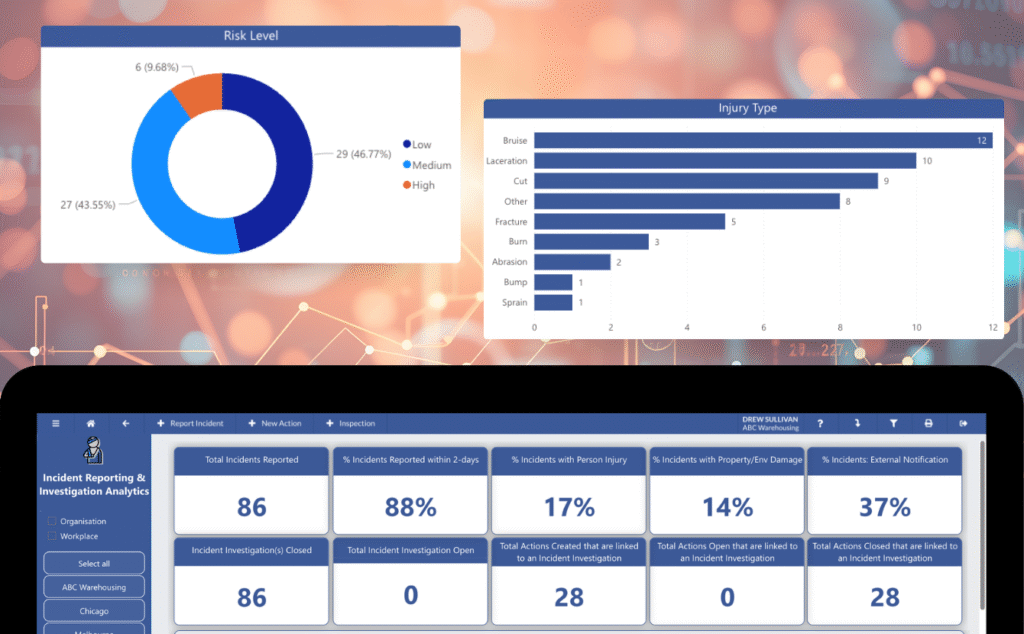
The Safety Champion Data Analytics Module enables organisations to capture, analyse, and interpret safety metrics across key areas of safety management. It transforms raw data into clear, visual insights that support proactive safety decisions.
Analysing tasks:
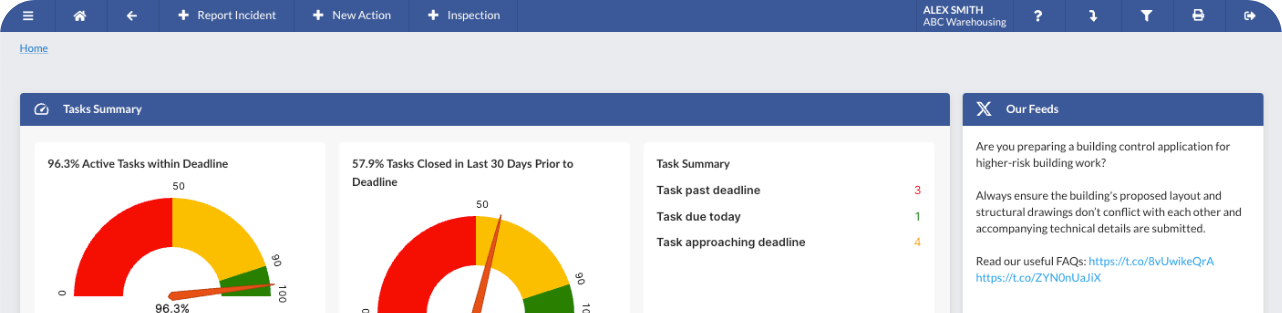
Tasks data provides a snapshot of the overall health of the business. By analysing tasks completed by date and module, organisations can confirm whether safety activities are being completed as planned and where follow-up may be required.
These safety metrics help ensure teams remain accountable and on track with critical safety responsibilities.
Analysing incidents:
Incident analysis allows organisations to review incidents by date, category, workplace, or demographics. This makes it easier to identify emerging trends early and strengthen safety plans before risks escalate.
Safety metrics related to associated injuries also support deeper understanding of incident severity and potential control failures.
Analysing actions:
Action tracking provides visibility over corrective actions in progress and those already closed. These safety metrics help confirm that issues are being addressed in a timely manner and that lessons learned are not lost.
Clear oversight of actions supports continuous improvement and reduces the likelihood of repeat incidents.
Analysing inspections:
Inspection data highlights how safety practices are being applied across the business. By visualising inspection outcomes and audit performance, organisations can see how safety culture is developing and where further support or intervention may be needed.
These safety metrics reinforce accountability and demonstrate a commitment to maintaining safe work environments.
Discover our full suite of modules to enhance safety management:
How safety metrics benefit the business
When used effectively, safety metrics deliver benefits well beyond compliance. They provide:
- Clarity by presenting safety information in a clear and accessible way.
- Understanding of the organisation’s unique risks and operational challenges.
- Confidence in decision making, supported by reliable data.
- Direction for targeted improvements that strengthen safety outcomes.
- Strong safety metrics help leaders understand what is really happening on the ground and support decisions that protect people and the business.
Making safety metrics work for your organisation
Every organisation is different, and safety metrics should reflect this. Selecting the right metrics, reviewing them regularly, and acting on the insights they provide are essential steps in effective safety management.
Combining the right safety metrics with a powerful Safety Management Software will allow you to find new insights, demonstrate due diligence, and continuously improve the safety performance of your business.
Safety metrics are not just numbers. They are a critical tool for protecting people, strengthening safety culture, and supporting sustainable business success.
FAQs
Leading safety metrics focus on proactive activities designed to prevent incidents before they occur, such as inspections, training, and hazard reporting.
Lagging safety metrics measure outcomes after an incident has happened, including injury rates and lost time injuries. Using both provides a balanced view of safety performance and supports effective safety management.
Safety metrics should be reviewed regularly to remain effective. Many organisations review key safety metrics monthly, while higher-risk activities may require weekly or real-time monitoring. Consistent review ensures emerging trends are identified early and corrective action can be taken promptly.
Safety metrics provide reliable data that helps leaders understand risks, prioritise actions, and allocate resources effectively. Analysing safety metrics, allow businesses to move beyond assumptions and make informed decisions that improve safety outcomes and support compliance.